LIVE QUAIL NOW AVAILABLE WHILE STOCKS LAST
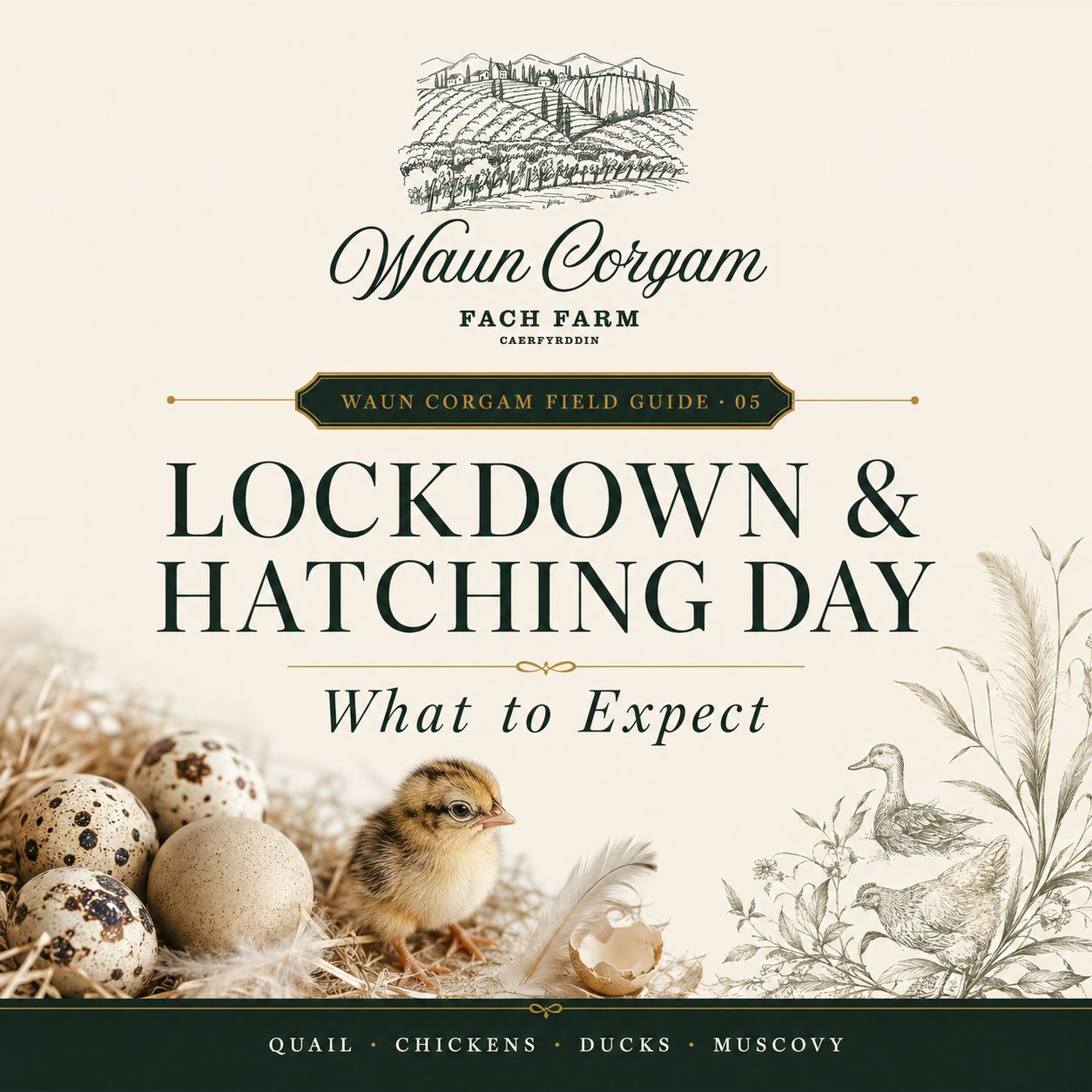
Lockdown & Hatching Day - What to Expect.– Free Waun Corgam Field Guide
Pay what you want
0 or more
£
Free or your own price
Tax-inclusive price: £0.00. Includes VAT (20%) £0.00
In stock
Save this product for later
Lockdown & Hatching Day - What to Expect.– Free Waun Corgam Field Guide
Product Details
Free Digital Field Guide
Lockdown & Hatching Day. What to expect.
Our Lockdown & Hatching Day – What to Expect field guide has been created for keepers who want a clear, practical guide to the final stage of incubation.
It covers Coturnix quail, chickens, common domestic ducks and Muscovy, helping you understand when lockdown begins, what happens during pipping and zipping, when to wait, and when a hatchling may genuinely need closer attention.
Inside the guide
✓ Species-specific lockdown dates
✓ Coturnix, chicken, duck & Muscovy hatch timing
✓ When to stop turning
✓ Hatching humidity & ventilation
✓ Internal pip explained
✓ External pip & zipping
✓ Normal resting periods during hatch
✓ What can be normal on hatch day
✓ Signs that deserve closer attention
✓ Why helping too early can be dangerous
✓ When to seek experienced or veterinary advice
✓ Moving newly hatched birds into the brooder
✓ Printable lockdown & hatch-day checklist
One hatch guide for several species
Lockdown does not happen on the same day for every bird.
Coturnix quail: lockdown around Day 15
Chicken: lockdown around Day 18
Most domestic ducks: lockdown around Day 25
Muscovy: lockdown around Day 31
The guide helps you follow the correct timetable for the species you are hatching rather than treating every egg the same.
Free to download
We want our Waun Corgam Field Guides to be useful and accessible, so this guide is available completely free of charge.
Simply enter £0 at checkout if you would like your free copy.
Would you like to support Waun Corgam?
Waun Corgam began as a small family project and is something we are continuing to build together.
If you find this guide useful, you are welcome to choose your own price at checkout. There is absolutely no obligation to pay.
Any optional contributions are reinvested back into the farm, helping us improve our animals' homes, develop our breeding projects, purchase equipment and continue producing practical free guides for other keepers.
Thank you for helping our little family farm continue to grow.
Learn · Hatch · Raise
Practical guides from our own hatching journey in West Wales.
Practical guides from our own hatching journey in West Wales.
Digital PDF download. This guide provides general educational information for small-scale poultry keepers and should be used alongside the instructions supplied with your incubator. Assisted hatching can carry serious risks; seek experienced or veterinary advice if you are unsure.
Display prices in:GBP